How Raccoons Live and What They Do
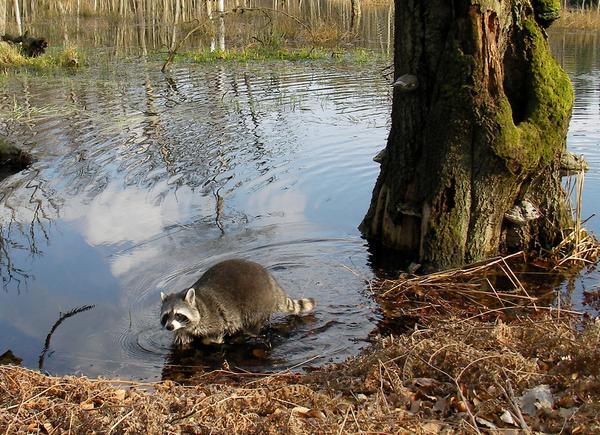
Raccoon in its natural woodland habitat
Raccoon (Procyon lotor)
The North American Raccoon is a really smart medium-sized mammal that's famous for its black "mask" around its eyes, striped tail, and super flexible front paws. These guys are active at night and eat pretty much anything. They're really good at solving problems and they have this weird habit of "washing" their food in water before eating it.
Scientific Name: Procyon lotor
Family: Procyonidae
Weight: 5-26 kg (11-57 lbs)
Lifespan: 2-3 years in the wild, up to 20 in captivity
Conservation Status: Least Concern (IUCN Red List)
Natural Habitat
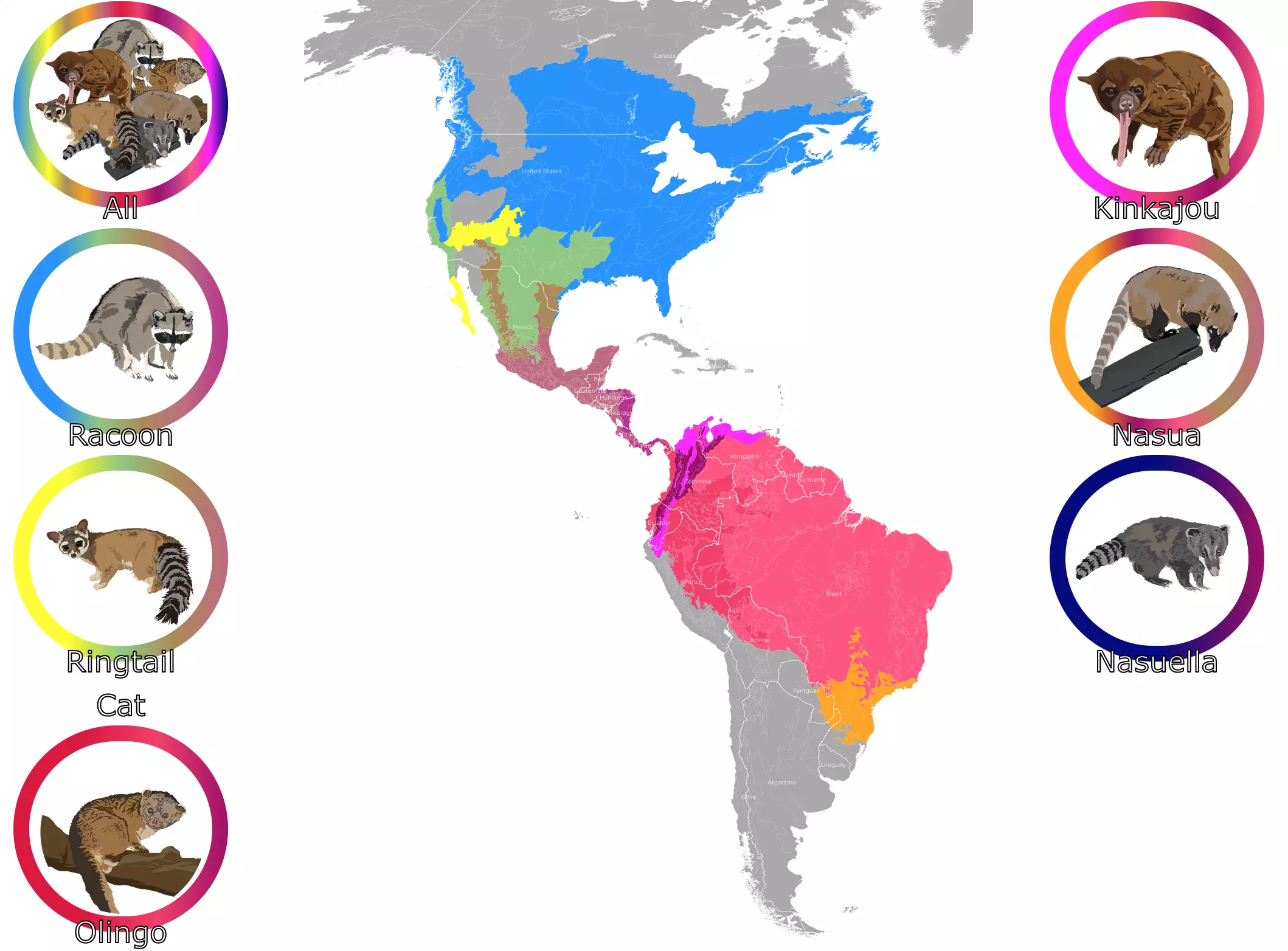
Global distribution of Raccoon populations
Raccoons originally come from North America but people have brought them to other places too. They're super good at living in lots of different places, including:
- Forests with trees that lose their leaves: Lots of places to hide and find food
- Swamps and wet areas: They really like being near water
- Cities and suburbs: They're really good at living around people
- Farm areas: Lots of different food to find
- Beach areas: They can find food from the ocean
- Areas near rivers: Places along rivers and streams
They're really good at living in places where humans have changed things. This is why raccoons are doing pretty well even when other animals are having a hard time because their homes are being destroyed.
Behavioral Research
How They Find Food
Raccoons eat basically anything and they're really good at finding food. Here's what makes them so good at it:
- They eat everything: Their diet changes with the seasons
- "Washing" their food: They dunk food in water to feel it better with their paws
- Great climbers: They look for food both on the ground and up in trees
- Super sensitive paws: They can find food just by touching things
- What they eat: Fruits, nuts, bugs, small animals, eggs, and human garbage
- Hiding food: They store food in tree holes and other secret spots
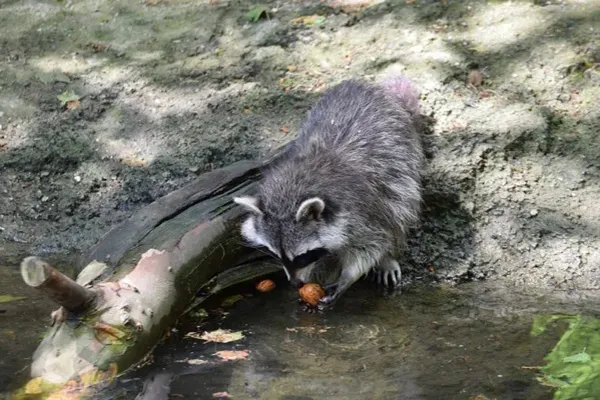
A raccoon doing its weird "washing" thing with food
Cool Fact:
Raccoons have super sensitive front paws with no fur on them, which makes them really good at grabbing things. They have way more feeling in their paws than most other animals, so they can figure out what something is just by touching it, even underwater.
Habitat/Enclosure Design
Interactive 3D Raccoon Enclosure
Explore this complex 3D model of a naturalistic raccoon enclosure designed to support all natural behaviors. Hover over the labels to learn about each feature and how it supports raccoon welfare.
• 🔍 Scroll to zoom in/out
• 🎯 Click labels to focus areas
• 🔄 Use reset for overview
👥 Capacity: 4-8 raccoons
Raccoon Naturalistic Enclosure Design
This enclosure design creates a natural-looking habitat that gives raccoons everything they need physically, socially, and mentally. The design has multiple levels, different types of terrain, and lots of fun activities that encourage the natural behaviors we see in wild raccoons.
Capacity: Good for a family group of 8-10 raccoons
Design Idea: Multi-level natural habitat with lots of cool environmental features
Cool Feature: Connected climbing networks and multiple mini-habitats
Complex Habitat Features
- Primary tree hollow den at 3m height
- Secondary rock cave system with tunnels
- Elevated platform den with weather protection
- Underground burrow entrance for escape routes
- Seasonal nesting boxes at various heights
- Interconnected den network via climbing routes
- Central climbing tree with multiple branch levels
- Rope bridge network connecting all areas
- Artificial climbing wall with varied textures
- Suspended platforms at different heights
- Natural log bridges and fallen tree structures
- Vertical climbing poles with grip variations
- Large central pool (3m diameter) for washing behavior
- Flowing stream connecting to waterfall feature
- Shallow wading areas with different substrates
- Multiple drinking stations throughout enclosure
- Seasonal pond areas that can be drained/filled
- Water circulation system maintaining freshness
- Deep soil areas for extensive digging
- Mulch zones hiding food items
- Sand pit for comfortable resting
- Gravel areas for tactile exploration
- Leaf litter zones mimicking forest floor
- Rocky areas for scent marking
Advanced Enrichment Systems
- Rotating puzzle feeder stations
- Hidden food caches throughout enclosure
- Scent trails leading to food rewards
- Manipulable objects with food compartments
- Seasonal fruit trees with climbing access
- Live insect release areas for hunting practice
- Rotating scent stations with natural odors
- Varied texture surfaces for tactile exploration
- Sound elements (water features, wind chimes)
- Visual barriers creating exploration opportunities
- Seasonal scent marking posts
- Interactive hanging toys at multiple levels
- Multi-step problem-solving food puzzles
- Changeable maze configurations
- Tool-use opportunities with provided objects
- Memory-based foraging challenges
- Social cooperation required feeding stations
- Novel object introduction schedule
- Multiple scent marking opportunities
- Territorial boundary definition areas
- Social interaction and retreat spaces
- Play areas with moveable objects
- Grooming stations with appropriate surfaces
- Observation points for territorial surveying
Environmental Control Systems
- Multiple shaded retreat areas
- Heated den spaces for winter
- Wind break structures
- Misting systems for summer cooling
- Natural ventilation corridors
- Natural daylight exposure areas
- Completely dark den spaces
- Dappled light through vegetation
- Adjustable artificial lighting
- Seasonal light cycle simulation
- Secure perimeter fencing (5m high)
- Underground dig-proof barriers
- Non-toxic materials throughout
- Hidden maintenance access points
- Emergency animal management systems
Why This Design Works So Well
This complex enclosure design specifically supports the natural behaviors we see in wild raccoons through multiple connected systems:
Better Food Finding Behavior
The multi-level terrain and different feeding strategies encourage complex hunting behaviors. The puzzle feeders are like the mental challenges of finding food in the wild. Food items are hidden throughout different substrate zones, which makes raccoons actively search for food across the entire enclosure. The live insect areas and seasonal fruit trees give opportunities for natural prey capture and seasonal diet changes, supporting the raccoon's eat-everything nature.
Better Social & Territory Behavior
The big enclosure gives enough space for family groups to establish complex territorial relationships. Multiple scent-marking opportunities (logs, rocks, high points, territory boundaries) allow for sophisticated territorial behaviors. The design includes both group spaces for social interaction and lots of private retreat areas supporting the flexible social structure of raccoons. The connected den network allows for natural family group dynamics while providing escape routes during conflicts.
Better Den & Nesting Behavior
Multiple den options with different characteristics support natural den selection and preparation behaviors. The main tree hollow provides optimal conditions for raising babies, while secondary dens mimic the multiple retreat options raccoons have in the wild. The underground burrow system provides emergency escape routes and alternative nesting sites. All denning areas are positioned to provide security while allowing natural parental behaviors and family group interactions.
Better Play & Exploration Behavior
The complex three-dimensional environment with varied terrain, lots of climbing opportunities, and numerous things to manipulate encourages sophisticated play behaviors. The design includes open areas for running and chasing play, complex climbing networks for physical development, and mental challenges for brain stimulation. Regularly rotated enrichment items keep things interesting and stimulate continuous exploratory behavior. The multi-level design allows for age-appropriate play areas for babies and adults.
Better Communication & Sensory Behavior
The enclosure design supports the full range of raccoon communication behaviors through strategically placed scent marking stations, acoustic properties that allow for natural vocalizations, and visual barriers that create appropriate social distances. The varied substrate zones provide different touch experiences supporting their highly developed sense of touch. Water features support their characteristic "washing" behavior while providing acoustic enrichment through flowing water sounds.
- National Geographic Society. (2023). "Raccoon." National Geographic.
- Britannica, The Editors of Encyclopaedia. (2024). "Raccoon." Encyclopedia Britannica.
- San Diego Zoo Wildlife Alliance. (2024). "Raccoon - Animals & Plants." San Diego Zoo.
- Animal Diversity Web. (2024). "Procyon lotor (northern raccoon)." University of Michigan Museum of Zoology.
- National Wildlife Federation. (2023). "Raccoon." National Wildlife Federation.
- BBC Wildlife Magazine. (2023). "Raccoon facts: what you need to know about these masked mammals." BBC Wildlife.